CAA accreditation in the UAE is increasingly focused on measurable outcomes and acquired skills.
The Outcomes-Based Evaluation Framework, OBEF, evaluates higher education institutions through 24 Key Performance Indicators across six pillars.
Employment Outcomes and Learning Outcomes carry the highest weight at 25% each.
The framework covers employability, learning, industry collaboration, research, reputation, and community engagement.
Several KPIs rely on multi-year data, making consistent institutional data management important.
What Is the Outcomes-Based Evaluation Framework (OBEF)
The Outcomes-Based Evaluation Framework (OBEF) is the UAE's framework for evaluating higher education institutions through measurable outcomes and defined performance indicators.
For universities working toward CAA accreditation, OBEF represents a shift from focusing primarily on institutional inputs and processes toward measuring what institutions achieve. The framework uses 24 KPIs across six areas of institutional performance and is designed to support evidence-based decision-making, benchmarking, and continuous improvement.
The current OBEF University Guidebook, Version 11.5, was issued on 23 March 2026. It provides definitions, weightings, data collection methods, calculation guidelines, and recommendations for the 24 KPIs.
OBEF at a Glance
OBEF Pillar
Weight
Number of KPIs
Employment Outcomes
25%
2
Learning Outcomes
25%
6
Industry Collaboration
20%
4
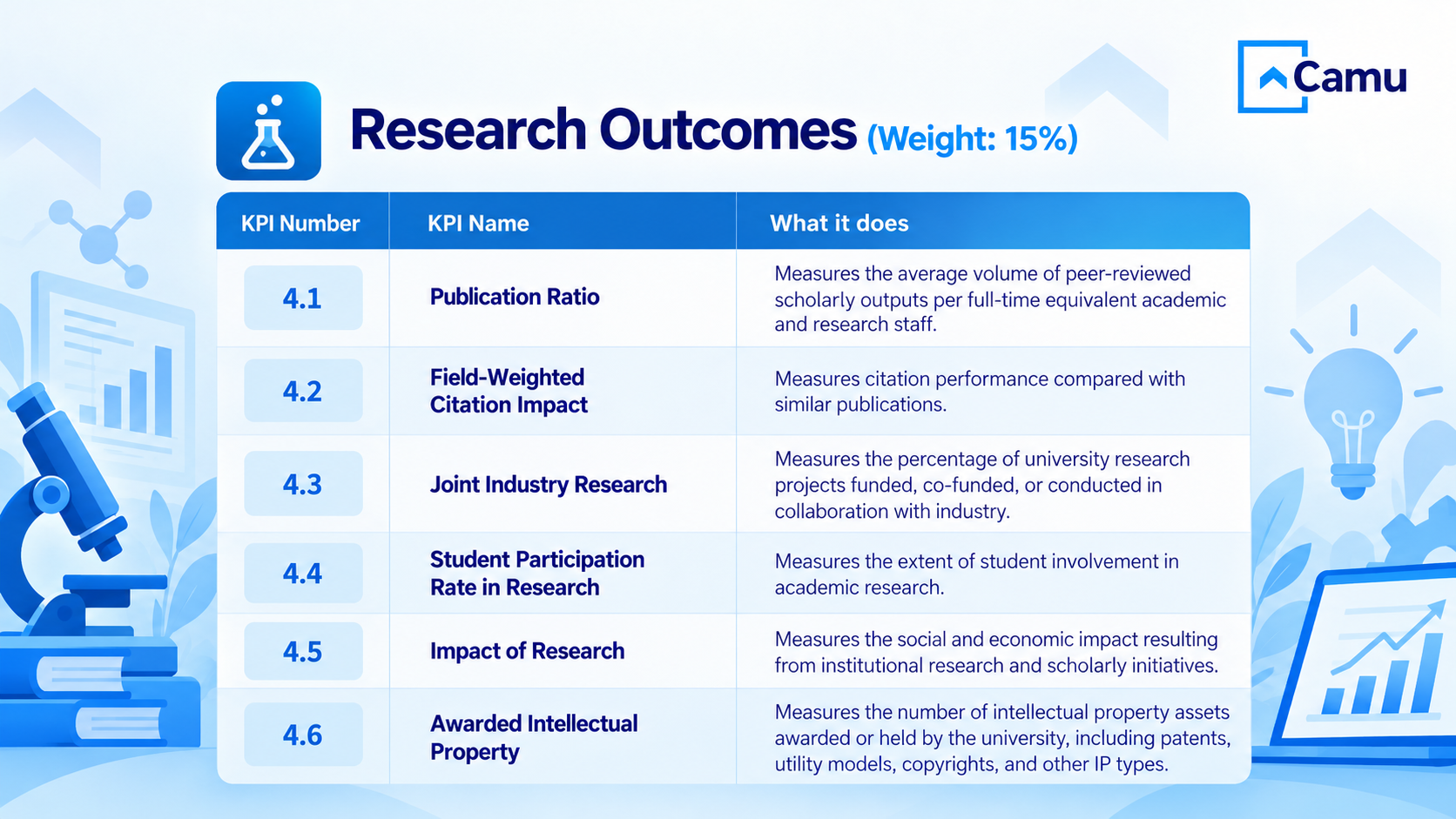
Research Outcomes
15%
6
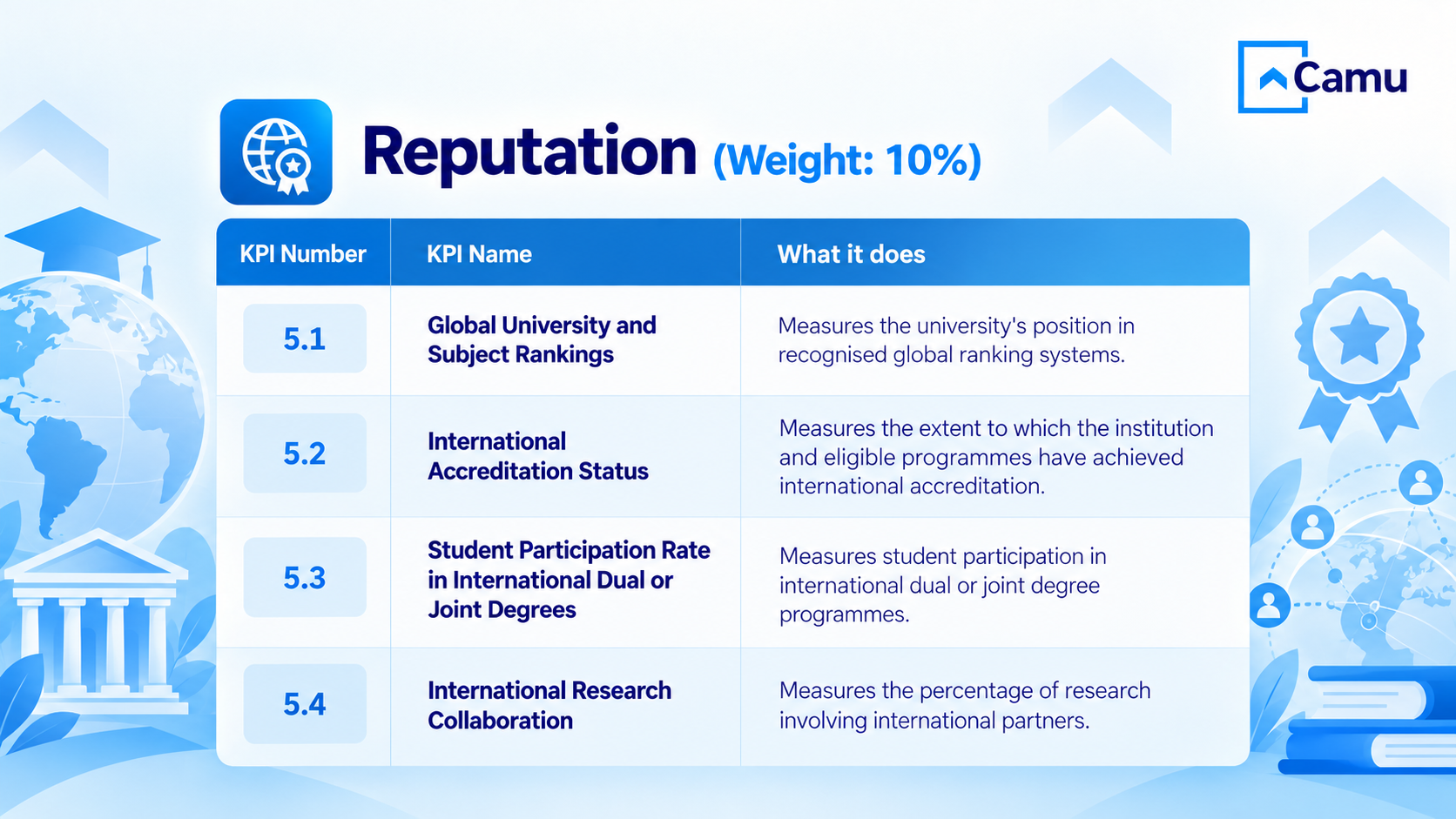
Reputation
10%
4
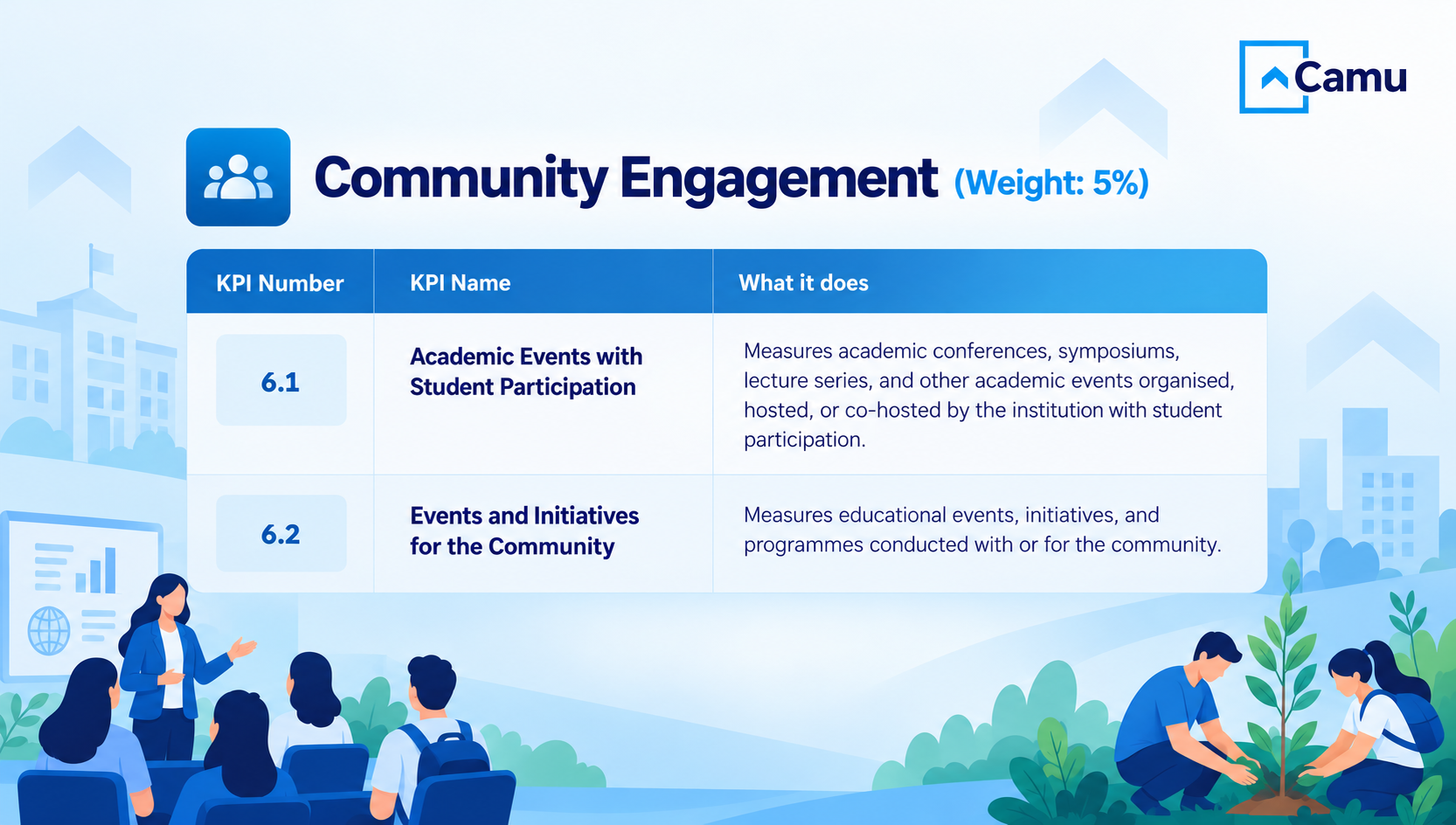
Community Engagement
5%
2
Total
100%
24
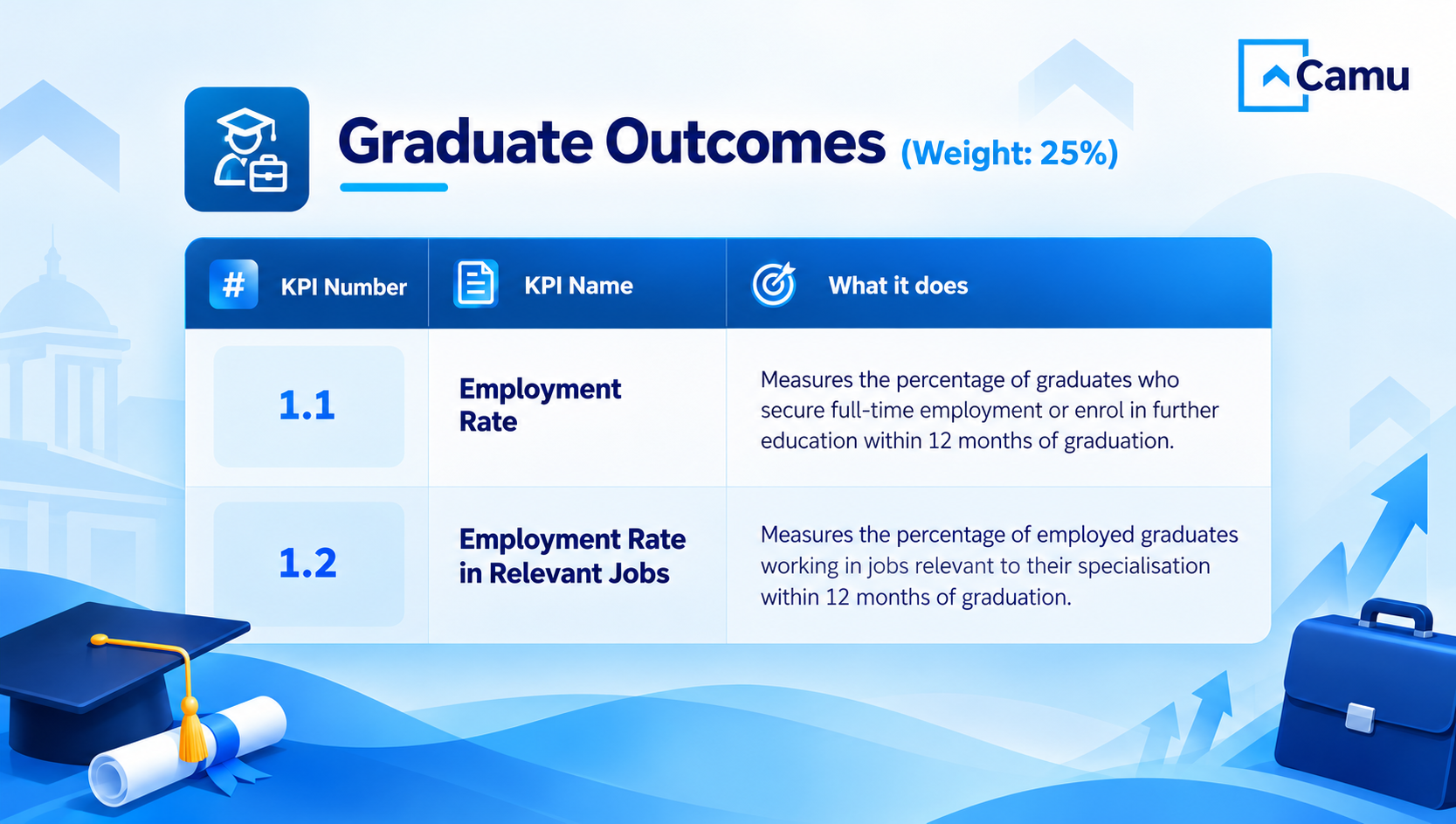
1. Employment Outcomes (Weight: 25%)
The Employment Outcomes pillar looks at how successfully graduates transition into employment or further education and whether their employment is relevant to their specialisation. Together, these KPIs place graduate outcomes at the centre of institutional evaluation.
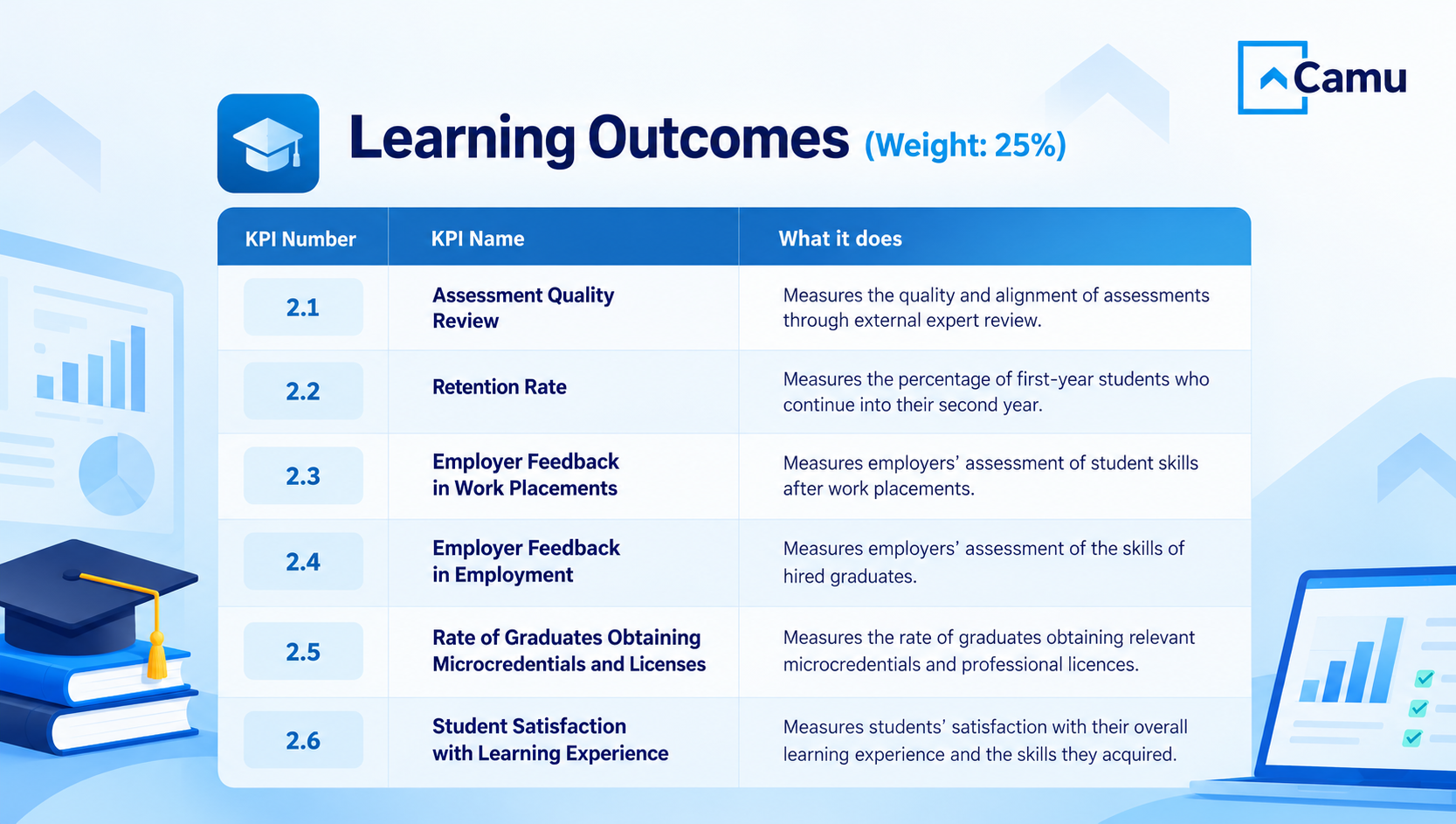
2. Learning Outcomes (Weight: 25%)
The Learning Outcomes pillar focuses on learning quality, student progression, skills acquisition, and the learning experience. The pillar therefore looks beyond course completion. It considers learning quality, progression, skills, employer feedback, and student experience.
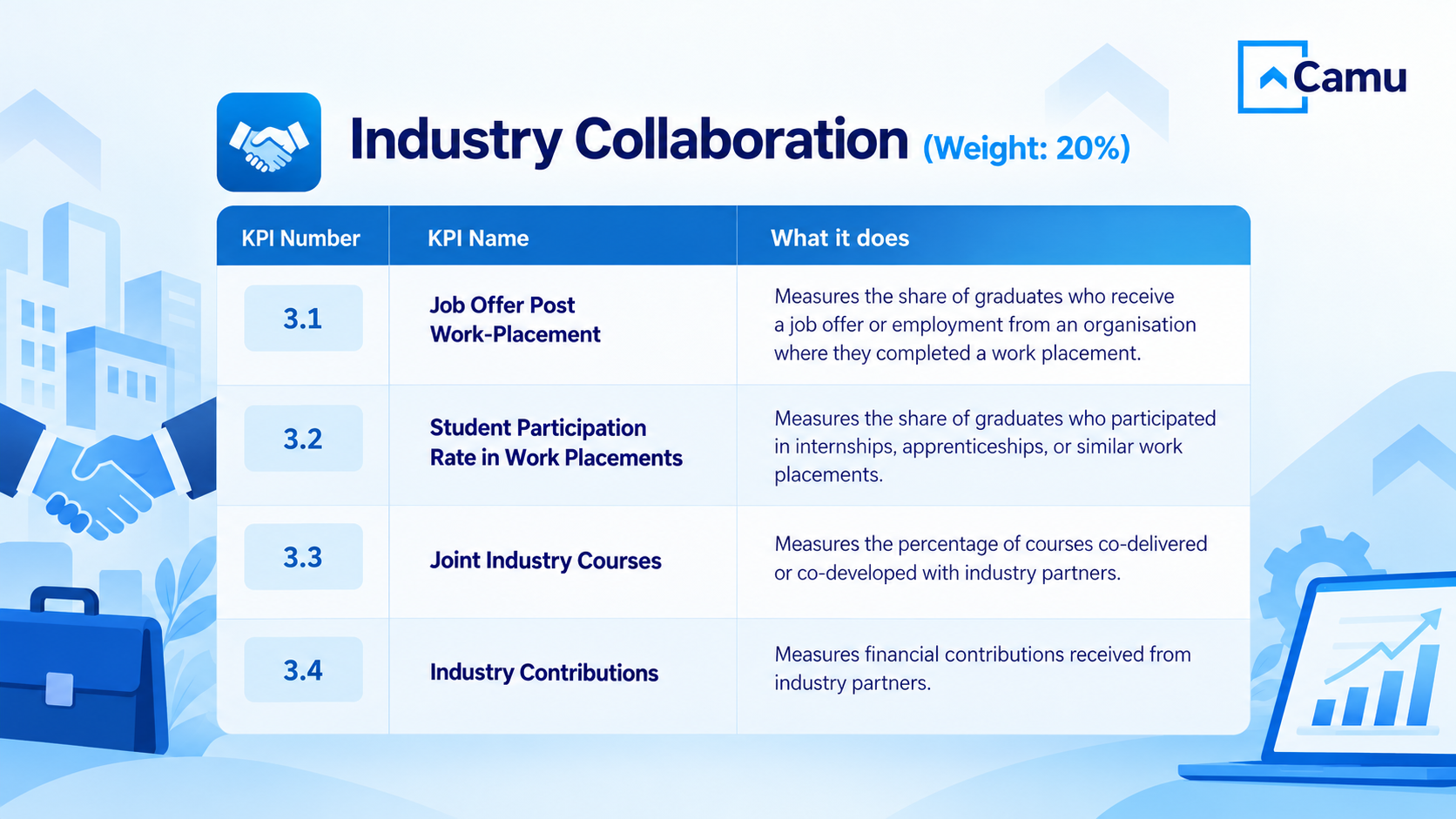
3. Industry Collaboration (Weight: 20%)
The Industry Collaboration pillar measures how effectively universities connect academic programmes and students with industry. This pillar connects industry engagement with employability, practical experience, and academic collaboration.
4. Research Outcomes Weight: 15%
The Research Outcomes pillar measures the scale, quality, collaboration, and impact of institutional research. This makes research evaluation broader than publication numbers alone.
5. Reputation (Weight: 10%)
The Reputation pillar considers how the university is positioned nationally and internationally. These indicators connect institutional reputation with international academic activity, accreditation, research, and student opportunities.
6. Community Engagement (Weight: 5%)
The Community Engagement pillar considers the university's contribution to the wider community. Although this pillar has the lowest weighting, it forms part of the overall assessment of institutional impact.
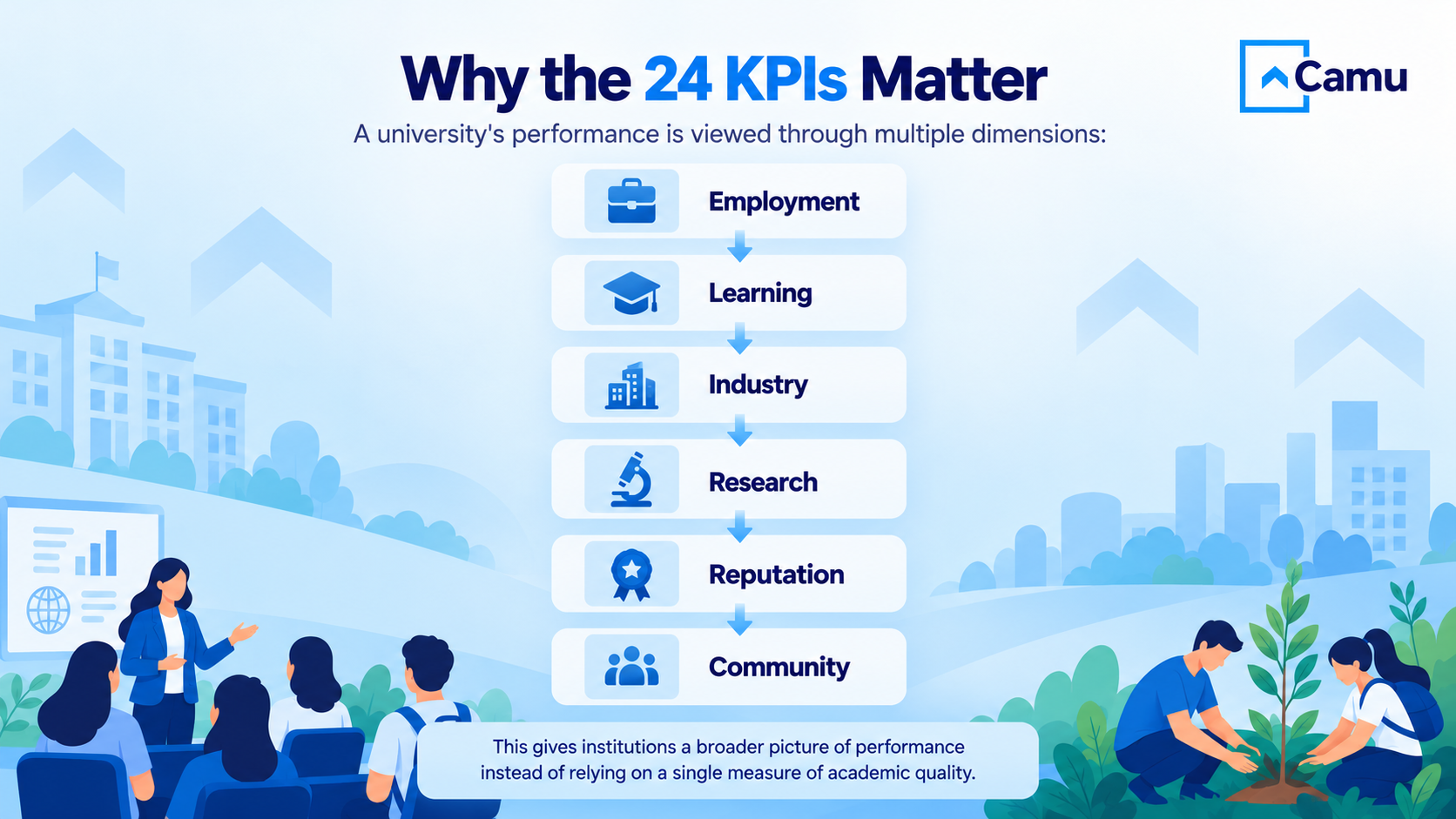
Why the 24 KPIs Matter
The value of OBEF is not only in the number of KPIs. It is in the range of institutional outcomes they bring together. A university's performance is viewed through multiple dimensions:
The framework also encourages institutions to look at performance over time. Three KPIs use the previous year's performance, 17 use three-year or five-year rolling averages, and four use cumulative five-year data.
How Camu Supports UAE Higher Education Institutions
Camu provides a connected digital campus platform for UAE higher education institutions, bringing together Student Information System, LMS, OBE, assessments, attendance, analytics, and reporting workflows.
Camu supports institutions with academic and outcome-based workflows such as:
Student and academic records
Curriculum and programme management
Assessments and results
CLO and PLO tracking
Attendance
OBE dashboards
Analytics and reporting
Connected SIS and LMS workflows
This connected approach helps institutions manage academic information across the student and programme lifecycle while supporting the visibility needed for outcome-based academic management.
Understanding OBEF Is the First Step
CAA accreditation in the UAE is moving toward a clearer focus on measurable outcomes, defined KPIs, reliable evidence, and continuous improvement.
OBEF provides the structure for this approach through six pillars and 24 KPIs covering employment, learning, industry collaboration, research, reputation, and community engagement.
For universities, understanding the framework is only the starting point.
The next step is ensuring the institution has the academic processes, data, systems, and reporting capabilities needed to measure these outcomes consistently.
With OBEF becoming an important part of UAE higher education evaluation, universities that build stronger data and academic management practices are better positioned to understand their performance and act on it.